Fractionova

← All perspectives

The UAE in the new trade order

In a world of rival blocs, the middle is a position.

DMCC’s Future of Trade 2026 finds that only 4% of senior trade leaders expect the best case for global trade. It names the UAE among the middle powers capturing redirected trade and investment. For a business that uses the UAE as a base, a gateway or a market, the useful question is which commitment the evidence now supports.

This page sets out the report’s UAE-relevant findings and the decisions they raise. Fractionova brings AI-native Opportunity Intelligence and principal-led judgement to those decisions, from Chennai with a strategic presence in Dubai.

Start a Decision

Future of Trade 2026: Rebuilding Through Rupture is published by DMCC, a Dubai Government authority. It was launched in June 2026 and draws on a survey of more than 130 businesses and 12 roundtables from Dubai to Shanghai. Figures are DMCC’s or those of the sources it cites; the interpretation is Fractionova’s. Fractionova is not affiliated with DMCC.

Which scenario do senior trade leaders expect for the next one to three years?

4%Best case
80%+Baseline
~12%Worst case

Baseline: slow, uneven growth, higher costs and continuous supply-chain adjustment.

DMCC Future of Trade Survey 2026 · 130+ respondents

Where DMCC’s report places the UAE

The UAE appears throughout the report as a deliberate hub between trading blocs. Four findings stand out for businesses connected to it.

A hub between blocs

India, Singapore and the UAE are named as the clearest examples of the middle-power playbook: positioned as hubs between competing systems rather than members of either. India and the UAE were both among the top five destinations for greenfield investment in 2024.

Resilience under pressure

The UAE held second place in DMCC’s Commodity Trade Index despite the closure of the Strait of Hormuz, helped by rerouting through Fujairah and Khor Fakkan.

DMCC Commodity Trade Index 2026 · index score, 0–100%

Capital for both energy orders

Gulf funds hold around 40% of global sovereign wealth fund assets and nearly half of all sovereign green assets. The report describes the UAE’s mineral-processing investments, including a 51% stake in Zambia’s Mopani copper mines, as a deliberate bet on being the hub that bridges fragmented supply chains.

New rails for trade

The UAE executed its first cross-border central bank digital currency transaction with China on mBridge in November 2025. India’s UPI is live in the UAE. The report describes the UAE’s trade finance gap as negligible, against one of the largest shortfalls in India.

Six trade shifts and the decision each one raises

A finding matters commercially when it is connected to a specific business. These are the questions Fractionova would put first, organised by the dimension of the opportunity they affect.

Policy & geostrategic conditions

From rules to relationships

19.7% of world merchandise imports now face tariffs or similar measures, up from 12.6% a year earlier. Around three-quarters of respondents expect trade to become regional, bloc-based or bilateral.

The decision

Which agreements change the economics of our routes, and does our product actually qualify for them?

Counterparties & dependencies

Resilience as a standing cost

“China + one” has become “China + many”. US imports from Vietnam rose 345% and from India 94% between 2014 and 2024. The Hormuz closure added energy and shipping risk to the same calculation.

The decision

Where should production, inventory and contracting sit between India, the UAE and our customers?

Demand & market access

The South–South shift

Trade between developing economies is now about 35% of the global total, ahead of trade between advanced economies at around 25%. The report recommends an explicit position on the two or three corridors most relevant to each sector.

The decision

Which corridors through the UAE, into Africa, South Asia or the wider Middle East, deserve relationships built now?

Technology & application

The AI infrastructure build-out

AI-related goods were about 15% of trade by volume but drove 43% of its growth in the first half of 2025. New grid connections in Frankfurt, London, Amsterdam, Paris and Dublin can take seven to ten years; the Gulf is described as well positioned for data-centre investment.

The decision

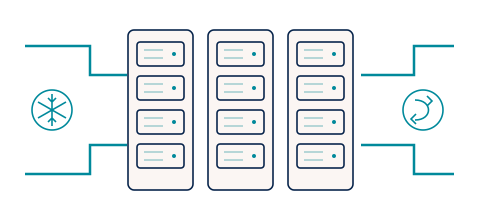
Where does our cooling, power, automation or component capability fit the region’s projects, and who specifies it?

Economics & capital

Sovereign capital as a partner

GCC countries have invested $37.7bn in around 62.9 GW of renewable projects and are targeting 165 GW by 2030. The report recommends treating Gulf sovereign capital as a strategic partner in clean-tech supply chains.

The decision

Could a sovereign-backed programme be a customer, partner or co-investor for our capability, and on what terms?

Timing & strategic position

The intelligence divide

Only 14% of businesses describe their AI use in trade as integrated or transformational, and a quarter report no material change to operations. The report describes geopolitical analysis becoming a standing input into supply-chain, treasury and investment decisions.

The decision

Is our view of these conditions continuous, or do we revisit it only when something breaks?

India and the UAE, working as one commercial position

The report places India and the UAE side by side as middle powers, and their strengths are complementary. India is gaining production share in electronics, automotive and clean energy, and reached a record $150bn of energy investment in 2025. The UAE brings depth at the transaction layer: commodity and logistics infrastructure, sovereign capital and a trade finance gap the report calls negligible.

For many businesses that suggests a configuration worth testing: engineer or produce in India; contract, finance, hold inventory and distribute through the UAE; serve selected markets beyond. Whether it works depends on the product, the origin rules, the partners and the destination markets.

Fractionova’s AI engine follows the commercial and physical flows. Principal-led review tests each proposed advantage against the actual arrangement.

Explore Market Entry & Partner Intelligence

India–UAE commercial configurationIndia provides engineering, production and assembly. The UAE provides contracting, trade finance, inventory, regional distribution and capital. Together they serve selected markets in the GCC, Africa, Europe and South Asia. Each advantage is tested against product, origin, partner and destination. IndiaEngineeringProductionAssembly & licensingCustomer demandOrigin UAEContractingTrade financeInventoryRegional distributionSovereign capitalHub Selected marketsGCCAfricaEuropeSouth Asia RoutingDirect supply, for comparisonEach advantage tested against product, origin, partner and destination

Decisions this page is written for

Bring the question in the form your board would ask it.

Where do we fit in the region’s data-centre, mobility and energy projects?

Focus Areas

From recommendation to decision

DMCC closes each chapter with recommendations for businesses. Acting on them is an intelligence task first: it requires connected, continuing investigation of markets, counterparties and conditions.

DMCC recommendationWhat acting on it requiresFractionova’s contribution
Build a structured middle-power strategy into market development planning.An assessment of presence, partners and regulatory relationships across the UAE, India and other middle-power markets.AI-led comparison of markets, entry models and counterparties, leading to a recommended configuration and sequence.
Map tariff exposure dynamically across every major trade corridor.Live scenarios showing when a product, supplier or route stops being commercially viable.Configured monitoring that reassesses routes and supply options as trade conditions change.
Develop an explicit position on South–South trade corridors.A shortlist of corridors, the barriers to entry and the local relationships that take years to build.Corridor and counterparty intelligence, prioritised by access and commercial fit.
Treat Gulf sovereign capital as a strategic partner in clean-tech supply chains.Visibility of where that capital is flowing and where it overlaps with your capability.Investigation of programmes, sponsors and partners, qualified against the role each would play.
Factor infrastructure depth into market entry and location decisions.Energy, grid, connectivity and logistics assessed alongside demand and cost.Connected analysis of location options against the opportunity’s operating requirements.

Principal-led judgement frames the mandate, challenges analytical findings and guides the development of recommendations. AI provides the analytical breadth, coordination and continuity through which that mandate is developed.

A regional base, a production partner, or both?

This is a hypothetical illustration, not a client engagement or a claim of achieved outcomes.

A European supplier of liquid-cooling equipment sees data-centre projects across the Gulf and in India. It has capacity to support one initial deployment and wants that investment to establish a foundation for further business.

Fractionova’s AI engine would connect project signals with procurement routes, integrator roles, origin and duty implications, service obligations and partner capability. Principal-led review would establish which configuration supports a credible first deployment and what evidence would justify the next commitment.

Explore the Data-Centre Cooling Assessment

A

Serve the Gulf through a Dubai-based distributorLowest commitment. The questions are which customers the partner actually reaches and who commissions and supports the equipment.

B

Establish a UAE regional companyContracting, inventory and commissioning support close to projects. The questions are working capital, local service capacity and the project pipeline it depends on.

C

Add assembly with a qualified Indian partnerServes India locally and may supply the Gulf. The questions are demand evidence, quality capability, technology control and whether origin rules support the route.

Three ways to commission the intelligence

You do not need to choose a format first. The starting point is the decision your business needs to make.

Decision Sprint

Concentrated intelligence for a consequential choice.

A focused investigation around a defined decision, culminating in a decision brief with the recommended direction, unresolved questions and conditions for commitment.

For example: does an India–UAE configuration hold for one product line?

Market & Partner Mission

A coordinated mandate to develop market access and commercial relationships.

An integrated investigation into market priorities, entry structures and counterparties, with prioritised partners and preparation for engagement.

For example: qualify Gulf distributors and Indian production partners for a regional entry.

Fractionova Intelligence Office

A retained intelligence capability around your strategic agenda.

Recurring investigation and monitoring, supported by agreed business context and structured principal-led reviews.

For example: an agreed watch on the corridors, tariffs and projects that affect your routes.

Principal-led, from Chennai and Dubai

Founder & Principal Prabha Shankar leads the technical-commercial judgement behind Fractionova’s work. An engineer and international business specialist, he brings nearly three decades of experience across automotive engineering management, advanced mobility, new energy, international market development and complex programme execution.

At Fractionova, that experience shapes the questions put to the AI engine, the assumptions challenged during investigation and the commercial significance assigned to its findings.

ExperienceIndia, Europe and the Gulf, with automotive companies, institutions and government stakeholders
MotorsportSecretary of the Event for three editions of the Formula One Indian Grand Prix
EducationElectrical & Electronics Engineering; postgraduate study at Stevens Institute of Technology

Questions this page answers

What does DMCC’s Future of Trade 2026 report say about the UAE?

DMCC’s Future of Trade 2026, published in June 2026, names the UAE with India and Singapore as the clearest examples of middle powers: economies positioned as hubs between competing trade blocs. The UAE held second place in DMCC’s Commodity Trade Index 2026, behind the United States, despite the closure of the Strait of Hormuz.

Why does the report describe the UAE and India as middle powers?

Both attract trade and investment by working across competing blocs instead of joining one. India and the UAE were both among the top five destinations for greenfield investment in 2024. The report recommends that businesses build a structured middle-power strategy into their market development planning.

How did the Strait of Hormuz closure affect UAE trade?

The report finds that the closure, from 4 March 2026, reduced the UAE’s commodity score, while exports were partly rerouted through Fujairah and Khor Fakkan. Shipping through the strait remained disrupted at the end of September 2026, so supply-route decisions still need current evidence.

What should a UAE-based business do in response?

Start with a specific decision: where to produce, which partners can deliver regional access, which corridors to develop, or whether a supply route still holds. Each finding matters commercially only when it is tested against a particular product, origin, partner and destination market.

What is Fractionova?

Fractionova is an AI-native Opportunity Intelligence company, based in Chennai with a strategic presence in Dubai. It identifies, develops and qualifies commercial opportunities at the intersection of technology, markets, capital and geopolitics, combining agentic AI investigation with principal-led judgement from Founder & Principal Prabha Shankar.

More perspectives

  • Trade & market access

    Selling into AI-Ready Markets

    Microsoft finds AI users in India and the UAE well ahead of the global average. What buyer readiness changes, and does not, for suppliers entering.

    Microsoft
    October 2026
  • Trade & market access

    Where AI Is Built

    Deloitte finds 77% of companies weigh where an AI solution comes from. What sovereign AI changes for cross-border sales, local partners and market entry.

    Deloitte
    October 2026
  • Mobility

    Automotive’s Next Growth Map

    PwC finds automotive executives turning to South Asia for growth and Indian automakers buying capability. What that means for licensing, partners and market entry.

    PwC
    October 2026

All perspectives

Bring the decision that deserves deeper intelligence.

A market to enter. A configuration to test. A partner to qualify. An investment direction to establish.

Start with what you are considering, what is at stake and what you need to determine.

Start a Decision

Sources and notes. Figures are from DMCC, Future of Trade 2026: Rebuilding Through Rupture (June 2026), and the WTO, IEA, UNCTAD and other sources it cites. The Commodity Trade Index is DMCC’s own methodology. Shipping through the Strait of Hormuz remained disrupted at the end of September 2026 (Lloyd’s List Intelligence). Fractionova is not affiliated with DMCC.

Fractionova equips clients with intelligence and considered recommendations to inform their decisions. Investment and implementation decisions remain with the client; execution and outcomes depend on the organisations involved and prevailing conditions.

Back to top